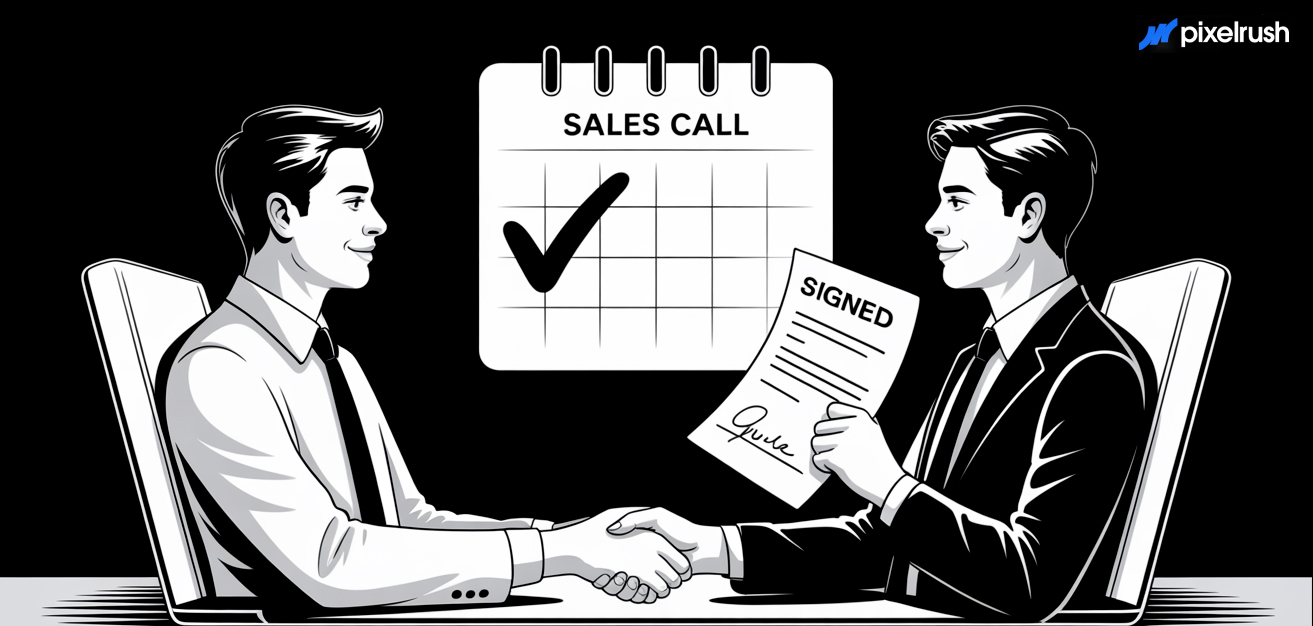
You paid for the lead. They clicked. They filled in the form. And then... nothing.
No booking. No reply. No signed client. Just silence, and another chunk of your ad budget gone.
Here's the uncomfortable truth: most of your leads were never going to convert on the first visit, and no amount of ad optimisation will change that. The problem isn't the platform, the targeting, or even the landing page. It's what happens, or more accurately what doesn't happen, after they raise their hand.
Key Takeaways
-
Most traffic won't convert regardless of how well your ads perform, but well-run paid campaigns can convert 10 to 20% of leads into clients.
-
The remaining 80 to 90% aren't lost forever. They're just not ready yet, and a proper nurture system is what separates businesses that capitalise on that from those that throw leads in the bin.
-
Before you build anything, know exactly who you're targeting. The sequence only works if the message matches the person.
-
A 7 to 14 day initial sequence with a specific goal (a booked call, a completed form) should be the core of your follow-up, monitored tightly for open rate, click-through, and conversion.
-
Prospects who take a soft action during that window, like clicking a link but not booking, should be treated differently to those who didn't engage at all.
-
Prospects who don't convert in the first two weeks should roll into a long-term evergreen sequence designed to shift beliefs and stay top of mind.
-
Speed to lead via SMS and AI appointment setting dramatically increases contact rate and booking rate.
-
Social video is one of the most underused nurture tools, and there's a rule of thumb that once a prospect has consumed around 7 to 8 hours of your content, they're significantly more likely to buy.
-
Think of your email sequence like a sports team: cut the underperformers, keep what works, and build a system that keeps getting stronger.
The Reality of Conversion Rates (And Why You're Not Broken)
Let's start with an honest conversation about the numbers. Most websites convert somewhere between 1 and 5% of their traffic. Run a well-structured paid ads campaign for a professional service business (law firm, accountant, financial planner) and you can realistically push that to 10 to 20% of leads into actual clients, if your follow-up is dialled in.
That still means 80 to 90% of the people who showed enough interest to click your ad, visit your page, and even fill in a form... don't convert. Not immediately.
This isn't a failure. It's the nature of considered purchases. Nobody hires a lawyer, a specialist, or a high-ticket service provider on impulse. They think about it. They get distracted. Life happens. And if you've disappeared by the time they're ready to make a decision, someone else gets the job.
Pro Tip: The businesses that understand this don't panic about conversion rates. They build systems. If you're not sure whether your current system is working, here's how to tell.
Why Multiple Touch Points Still Matter (And Always Will)
There's a concept in marketing called the Rule of Seven. The idea is that a prospect needs to encounter your brand at least seven times before they're ready to take action. It was developed decades ago and it still holds up, not because the number is magic, but because it reflects something true about human psychology: trust is built through repeated, consistent exposure.
In practice, what this looks like is someone finding you on Google, seeing your ad again on social media later that week, reading one of your blog posts when they search a related question, then finally booking a call when they receive your third follow-up email. Each touchpoint moves them closer to a decision. Remove any of those steps and you lose a percentage of people who would have converted.
There's also a newer piece of research worth knowing about. A content consumption study found that once a prospect reaches roughly 7 to 8 hours of engagement with your content, across videos, articles, emails, podcasts, whatever format they're consuming, they are significantly more likely to convert and to pay more for your services. That's not 7 to 8 hours on your website. It's cumulative exposure across all your channels.
Key Insight: The implication is clear: the more useful content you put in front of the right people, the more likely they are to become clients. Not by being aggressive, but by being consistently present and genuinely helpful.
Building Your Nurture System the Right Way
Start With Your Targeting (Before Anything Else)
A nurture system is only as good as the clarity of who it's built for. If you're unclear on exactly who your ideal prospect is, your sequence will feel generic, open rates will suffer, and you'll draw the wrong conclusions about what's working.
Before you write a single email, get specific. Who are you talking to? What are they worried about right now? What do they want to achieve? The more tightly you can answer those questions, the more your sequence will feel like it was written personally for each person reading it.
This is the prerequisite that most businesses skip. They set up the automation first and figure out the audience later. Do it the other way around.
The 7 to 14 Day Initial Sequence (With a Specific Goal)
The biggest mistake businesses make with email automation is treating it like a nice-to-have rather than a conversion system with measurable outcomes.
Your initial sequence, the first 7 to 14 days after a lead enters your system, should be built around one specific goal. For most service businesses, that's a booked consultation, a completed application, or a discovery call. Everything in those first two weeks should drive toward that single action.
Quick Win: If you don't have a defined goal for your sequence, create one before you write a single email. You need a metric to judge success against, otherwise you're just sending emails and hoping for the best.
During this period, monitor your key metrics closely:
| Metric | What It Tells You | Action If Low |
|---|---|---|
| Open Rate | Subject line quality / list engagement | Test new subject lines, check send times |
| Click-Through Rate | Copy persuasiveness / offer clarity | Rewrite CTAs, simplify the ask |
| Conversion Rate | Offer-market fit / landing page quality | Review your offer, fix friction points |
| Unsubscribe Rate | Relevance / frequency tolerance | Segment your list, reduce frequency |
This 7 to 14 day window is your best opportunity to capture someone who is warm but hasn't quite crossed the line yet. They showed intent by opting in, and your job is to give them enough confidence to take the next step while that intent is still fresh.
Soft Actions: The Signal Most Businesses Ignore
Not every lead who doesn't book is the same. There's a big difference between someone who received every email and never opened one, and someone who clicked through to your booking page three times but didn't pull the trigger.
The second person is telling you something. They're interested but something is holding them back, whether that's uncertainty, timing, or not quite enough trust yet. These prospects deserve a different conversation to those who haven't engaged at all.
Most email platforms let you segment based on behaviour. Someone who clicks your booking link but doesn't complete should receive a follow-up that addresses hesitation directly. Something like an FAQ, a testimonial, or a personal check-in can be enough to tip them over. Treating every non-booking the same is leaving money on the table.
Pro Tip: Set up a simple automation rule: if a prospect clicks your booking link more than once without completing, trigger a personal-feeling email from the founder or senior team member. This single automation consistently outperforms generic follow-ups.
The Long-Term Evergreen Sequence
For the prospects who don't convert in the first two weeks, the game changes. You don't abandon them. You shift from urgency to consistency.
This is where a long-term email sequence earns its place. These aren't newsletters or company updates. They're evergreen pieces designed to do two things: change beliefs and connect emotionally to outcomes.
The technical how-to content has its place, but it dates quickly and rarely moves people to action on its own. What does move people is content that challenges how they see their problem, helps them picture what their life or business looks like on the other side, and builds quiet confidence in you as the person to get them there.
Personal injury law firms see this play out constantly. The prospects who don't book after the first contact aren't necessarily sceptical. They're often still processing whether they have a real case, whether it's worth the stress, whether they can afford it. Emails that address those emotional barriers, not just explain the process, are the ones that convert months down the track.
Keep this content evergreen. Don't write about industry news that'll be irrelevant in six months. Write about the universal fears, frustrations, and aspirations of your ideal prospect. That content works today and it'll work in three years.
As for frequency, monthly is a solid starting point. But this varies depending on your audience size and how engaged they are. A smaller, high-intent list might tolerate more frequent contact. A broader, colder audience might need more space. Test it, watch your unsubscribe rate, and adjust accordingly.
Building Your Sequence Over Time (The Pause Method)
Here's a practical way to build a 12-month sequence without burning out in month one.
Write your content in batches. When you reach the end of what you've written, add a pause to your automation. This stops the prospect from receiving emails until you've added the next batch. As you write more content over time, push prospects through to the next stage and remove the pause.
Before long, you'll have a sequence that new prospects can move through seamlessly, without any gaps. Future leads won't ever see the seams. They'll just experience a steady, well-structured flow of content that builds trust over months.
Key Insight: Think of it like a construction project. You don't need the whole building finished before you open the doors. You just need the first floor liveable, then you keep building.
Speed to Lead: Why the First Response Decides the Outcome
Nurturing a lead over months only matters if you made a strong first impression in the first few minutes.
Speed to lead is one of the most underdiscussed variables in lead generation. Research consistently shows that responding within five minutes of a form submission dramatically increases your chance of making contact and converting that prospect. Wait an hour and that probability drops sharply. Wait until the next day and most of the time, it's over.
AI-powered appointment setting via SMS is solving this in a practical way for service businesses. When a lead submits a form, they receive a personal-feeling SMS almost immediately. Not an autoresponder that screams "automated system," but a conversational message that starts a dialogue. Done well, the prospect genuinely isn't sure if they're talking to a human or not, which means they engage. And when they engage, you can qualify them quickly and get them into a booked call.
Expert Tip: This isn't about being pushy. It's about being present at the moment someone raises their hand. That moment is the highest-value window in the entire customer journey, and most businesses completely waste it. We've covered the 60-second rule in detail here.
If you're running Google Ads for professional services, where leads can cost anywhere from $100 to $500 or more depending on the market and competition, not having a speed-to-lead system is simply burning money.
Social Video: Your Most Underused Nurture Channel
Email is the backbone of your nurture system. But it shouldn't be the only tool.
Social video is one of the highest-leverage ways to keep moving prospects toward a decision, and most businesses haven't thought about it strategically as a nurture mechanism.
When someone finds you through a Google search or a paid ad, they might visit your website, read a page or two, and leave. But if they've also watched three of your videos on YouTube or seen your content on LinkedIn or Instagram, something different starts to happen. You're no longer a website to them. You're a person they know something about.
That matters enormously in professional services. Clients aren't just buying a service, they're buying the person delivering it. Video accelerates the trust-building process that email and written content do more slowly.
Key Insight: This also ties directly back to the 7 to 8 hour content consumption principle. Every video watched is time in the bank. Every podcast episode, every article, every email. They accumulate. The goal isn't any single piece of content, it's the cumulative experience of your brand.
Businesses that produce consistent, valuable video content give their prospects more opportunities to rack up those hours. It's also a cross-channel multiplier. A prospect who found you organically through search and then discovers you on YouTube or Instagram is now encountering you in multiple contexts. That's the multi-touch model working in your favour, without any extra ad spend.
Monitoring Your System Like a Sports Coach
Once your nurture system is running, your job is to manage it like a high-performance team, not set it and forget it.
Pull your data regularly. Look at each email individually. Which subject lines are getting opened? Which are being ignored? Which links are getting clicked? Which emails have the highest unsubscribe rate?
Some emails will be stars. They'll open at 45%, generate clicks, and move people forward. Others will be dead weight: low opens, no engagement, nothing. Just like a sports coach who keeps playing a striker who hasn't scored in twelve games, too many businesses keep sending emails that clearly aren't working because they're comfortable, not because they're effective.
Fast Fix: Cut the underperformers. Replace them. Test new angles. Over time, you'll end up with a sequence where every email earns its place, and that sequence gets more valuable the longer you run it, because every improvement compounds across every future prospect who goes through it.
This is the real advantage of a properly built nurture system. Done well, it gets smarter and more effective over time, without requiring more ad spend.
Pulling It Together: What a Modern Nurture System Looks Like
Here's how this works end to end for a well-run professional services business running a closed-loop growth system:
-
Someone clicks your ad. They land on your page. They fill in the form.
-
Within minutes, they receive an SMS that opens a conversation. If they engage, they're guided toward a booked call.
-
If they don't respond immediately, they enter your 7 to 14 day email sequence designed to get them to that call.
-
Prospects who show soft engagement during that window (clicks, page visits, partial form completions) get a targeted follow-up designed to address hesitation rather than just repeat the ask.
-
Prospects who don't engage at all still stay in the sequence, giving time and consistent touchpoints the chance to do their job.
-
Those who don't book after the initial sequence move into a long-term monthly sequence built on evergreen content that shifts beliefs and stays top of mind.
-
Meanwhile, your social video content is circulating in their feeds, adding hours to their cumulative engagement with your brand.
Six months down the track, one of those emails lands on the right day. Or they watch one of your videos and something finally clicks. They book. They convert. And the ROI from that one late conversion covers months of your nurture costs.
Key Takeaway: Most of them aren't gone. They're just not ready yet. Your job is to be there when they are.
Where to Start
If you're running paid ads and not already capturing leads into an automated system, that's your first move. Even a basic CRM and a short email sequence is better than nothing.
If you have a sequence but haven't looked at the data in months, pull it up this week. Check your open rates and click-through rates email by email. Find your worst performers and rewrite them.
If you're already running a solid initial sequence but nothing beyond that, start building your evergreen long-term nurture library. One email per month to start. Write for the emotional journey, not the technical process.
And if you're not using SMS for speed to lead, test it. The difference in contact rate alone is often enough to justify the cost of the entire system.
The businesses getting the best results from paid advertising aren't necessarily the ones with the best ads. They're the ones who make the most of every lead that comes through the door, because they've built the systems to do it.
If you want to understand what a proper closed-loop lead generation system looks like for your business, we'd be happy to walk you through it.
Want us to implement these strategies for you?
Book a free strategy call and let's discuss how we can grow your business.
Book Your Free Call
Written by
Byron Trzeciak
Founder of PixelRush, Byron has spent over a decade mastering digital marketing. His agency has helped 300+ brands grow, managed $10M+ in ad spend, and optimised 400+ landing pages. He shares hard-won strategies so you can skip the learning curve.
Continue Reading
View All →
Why Personal Injury Google Ads Are Getting More Expensive (And What to Do About It)
22 min read
The Lead Response Crisis: Why Your "Bad Leads" Might Actually Be Gold
4 min read